


My AFCON 2025 Experience And Observatory Beyond The Game
Land Is Strategy, Not Scenery: What Morocco’s Highways Reveal About Power, Policy, and Nigeria’s Blind Spot
So far, AFCON 2025 in Morocco has delivered thrilling football and excellent organization. Yet, beyond the stadiums, a deeper lesson unfolds—one that speaks less to sport and more to governance, economic planning, and national strategy.
According Sola Fanawopo
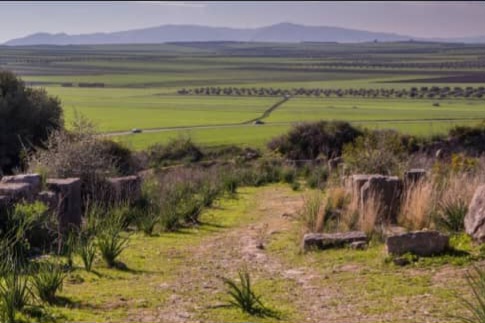
Chairman, Osun Football Association, every journey between match venues doubles as a lesson in statecraft. From Tangier to Agadir, and from Fès to Marrakech, a striking and consistent pattern emerges: almost every viable strip of land along Morocco’s highways is under cultivation.
Our five-hour drive from Casablanca to Fès—comparable to travelling from Lagos to Asaba—was not merely a road trip; it was an education in economic corridor management.
The same was evident on the route from Fès to Ifrane, Morocco’s famed “Little Switzerland.”
This is not accidental beauty or decorative farming. It is deliberate policy, visibly enforced.
This is governance made tangible.
AFCON Beyond Football:
In Morocco, highways are not built as prestige projects. They are designed and deployed as economic arteries. The farms visible through AFCON bus windows are not random holdings; they are part of planned agricultural belts intentionally located where infrastructure multiplies value.
Proximity to roads reduces transport costs, limits post-harvest losses, and enables even smallholder farmers to access national and export markets.
Here, infrastructure is not neutral—it is productive, or it is not built at all.
Agriculture by Design, Not Hope
This landscape is the outcome of sustained policy execution through frameworks such as Plan Maroc Vert and Génération Green 2020–2030. Land use is deliberate. Water systems are engineered. Crop choices are driven by value chains, not nostalgia.
Farms line the highways because the Moroccan state understands a fundamental principle: public infrastructure must generate private productivity.
Water Scarcity Did Not Become an Excuse
Morocco is not a water-rich nation. Yet its fields remain green because scarcity has produced discipline rather than resignation.
Drip irrigation is standard practice, not a pilot scheme. Dams feed defined agricultural zones. Solar-powered pumping systems reduce costs, while wasteful practices are actively discouraged.
Highway-adjacent farms are easier to integrate into these controlled systems—another reason they thrive.
Export Logic Shapes the Land
Much of what grows along Morocco’s highways—citrus, tomatoes, berries, olives, and greenhouse vegetables—is cultivated with export timing and logistics in mind. Speed matters. Reliability matters. Distance to ports matters, particularly major hubs such as Tangier Med Port.
Agriculture here is treated as a foreign-exchange industry, not a poverty-alleviation programme.
Nigeria in the Same AFCON Mirror
For a Nigerian observer, this contrast is deeply uncomfortable. Across Nigeria’s federal highways, vast stretches of fertile land lie idle—bush-covered, disputed, abandoned, or politically hoarded.
This is not due to poor soil or lack of farming capacity. It is the result of sentimental land ownership, weak governance, and poor coordination.
In Nigeria:
Roads are built without agricultural zoning
Irrigation remains seasonal and unreliable
Idle fertile land attracts no consequence
Ministries operate in silos
Agriculture is framed as survival, not strategy, The outcome is a painful contradiction: abundant arable land alongside chronic food imports and persistent rural poverty.
Lessons Nigeria Must Learn—Now, Not Later
Every Federal and state roads should be accompanied by agricultural belt plans—covering crops, water access, aggregation centres, storage, and markets. Idle Fertile Land Is Economic Sabotage
Use-it-or-lease-it policies must replace romantic land possession.
Idle land represents lost revenue, lost food security, and lost stability.
Water Is Not Optional Infrastructure
Dams, irrigation systems, and energy must be planned alongside roads. Rain-fed farming alone is no longer a strategy—it is a gamble.
Agriculture Must Be Export-Credible
Nigeria will not solve food insecurity if farming remains charity-driven. It must be profitable, scalable, bankable, and competitive.
Coordination Matters More Than Budget Size
Morocco’s success is not about spending more money, but about aligning land, water, transport, finance, and markets.
AFCON 2025 reveals a deeper truth: stadiums display ambition, but land reveals competence. When land along highways is cultivated, it signals a state that understands what it wants from infrastructure. When land is abandoned, it exposes a vacuum of policy imagination.
Nigeria does not lack land. Nigeria lacks urgency.
Until fertile land is treated as a strategic national asset—planned, protected, and compelled into productivity—the country will continue to drive past opportunity every day, mistaking emptiness for normalcy.
In Morocco, land is not scenery.
It is strategy.
Bạn sẽ có cảm giác như đang trở lại tuổi thơ khi điều khiển những chiếc súng bắn cá, slot365 đăng nhập săn lùng các loài cá quý hiếm để ghi điểm. Đây là trò chơi không chỉ giúp bạn giải trí mà còn rèn luyện sự khéo léo và nhanh nhạy. TONY01-06S
888slot là thương hiệu tiên phong tích hợp tiền điện tử vào thanh toán, mang lại sự tiện lợi và bảo mật hóa cao cho người dùng. TONY01-06S
Để tạo thêm động lực cho hội viên tham gia cá cược thì nhà cái đã thiết lập vô 888slot chương trình ưu đãi đặc sắc. Thương hiệu không ngần ngại đầu tư một khoản tiền rất lớn để tổ chức nhiều sự kiện tri ân nổi bật dành cho mọi đối tượng. Một trong những món quà tặng đặc biệt nhất là hoàn tiền khi thua cược. TONY01-12
Giao diện 188V được thiết kế responsive – co giãn tự động theo kích thước màn hình, đảm bảo trải nghiệm mượt mà trên iPhone, Android, iPad hay laptop. TONY01-29H
Some genuinely interesting information, well written and generally user genial.