
NFF Debunks Reports of FIFA Verdict on Nigeria–DR Congo Eligibility Dispute
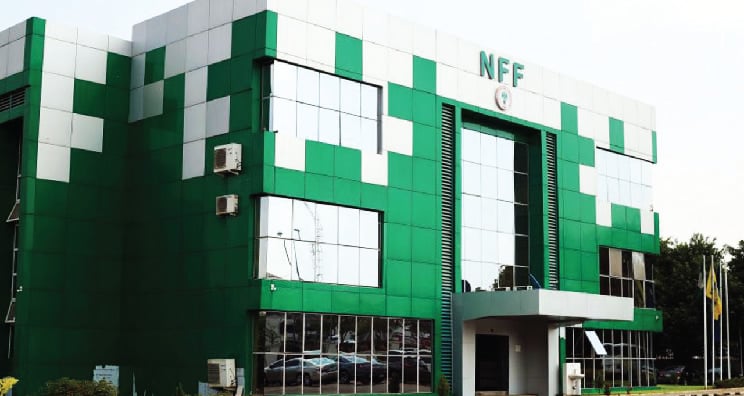
The Nigeria Football Federation (NFF) has dismissed circulating reports alleging that FIFA has delivered a verdict on Nigeria’s protest concerning the eligibility of certain players fielded by the Democratic Republic of Congo (DR Congo).
The dispute arose following Nigeria’s elimination on penalties by DR Congo’s national team in the final round of the African play-offs last November, a result that ended the Super Eagles’ hopes of progressing to the intercontinental play-offs for the 2026 FIFA World Cup.
In response to the outcome, the NFF submitted a formal petition to FIFA, challenging the eligibility of several DR Congo players.
The federation’s complaint centred on provisions of Congolese domestic law, which largely prohibit dual citizenship for adults. The NFF raised concerns that some players representing the Leopards allegedly hold European passports without formally renouncing prior nationality.
No FIFA Ruling Yet – NFF
The NFF has clarified that FIFA has not issued any ruling on the matter.
Ademola Olajire, Director of Communications for the federation, described online reports suggesting that FIFA had ruled either in favour of Nigeria or DR Congo as “false and misleading.”
“There is no decision from FIFA at this time. Any claims that a ruling has been made are incorrect.
FIFA has not communicated any verdict to either the NFF or the Congolese Football Federation,” Olajire stated.
The clarification follows widespread online speculation, including fabricated documents alleging that FIFA had awarded Nigeria a 3–0 victory and reinstated the Super Eagles in the qualification process. The NFF has categorically dismissed such claims as fake and urged the public to disregard them.
Background to the Petition
Nigeria’s petition was anchored on the interpretation of DR Congo’s domestic nationality laws.
According to the NFF, some players allegedly retained foreign nationalities — including Belgian, English, French, or Dutch citizenship — contrary to Congolese law.
NFF General Secretary Mohammed Sanusi explained that the federation’s concern is whether complete and accurate documentation was presented to FIFA during the eligibility clearance process.
“As far as FIFA is concerned, possession of a valid passport establishes eligibility. However, our concern is whether FIFA may have been misled in granting clearance,” Sanusi noted.
DR Congo’s Position
The Congolese Football Federation has rejected Nigeria’s claims, maintaining that eligibility for international competition is governed by FIFA statutes rather than domestic nationality laws.
Hérita Ilunga, Director of Football for DR Congo, urged Nigeria to accept the result on the field, emphasizing that FIFA’s sporting nationality regulations determine player qualification.
On social media, DR Congo’s official channels also dismissed the protest, characterizing it as an attempt to overturn the match outcome off the pitch.
Next Steps
FIFA retains the authority to investigate allegations relating to document falsification or regulatory breaches. Should any irregularities be established, potential sanctions could include player suspensions, match forfeitures, or other disciplinary measures.
However, FIFA traditionally relies on official documentation and passport verification when determining eligibility.
At present, the matter remains under review. The NFF has reaffirmed its commitment to due process and stated that it will provide updates only upon receiving formal communication from FIFA.
Until such notice is issued, reports suggesting that a verdict has been delivered in favour of either Nigeria or DR Congo remain unfounded.
A really good blog and me back again.
Good post. I learn something totally new and challenging on websites I stumbleupon every day.
It’s always exciting to read articles from other authors and practice something from their sites.
I had a chargeback issue and Gordon Thomas helped me resolve it without getting blacklisted.
Gordon is at https://medium.com/@gordonthomasff/seven-years-behind-the-scenes-now-im-here-to-share-what-i-actually-learned-d6f736b4c648 now.
Slot tại slot365 hỗ trợ ngôn ngữ tiếng Việt hoàn toàn – từ giao diện, mô tả game đến hỗ trợ kỹ thuật – loại bỏ rào cản ngôn ngữ cho người chơi trong nước. TONY03-04